


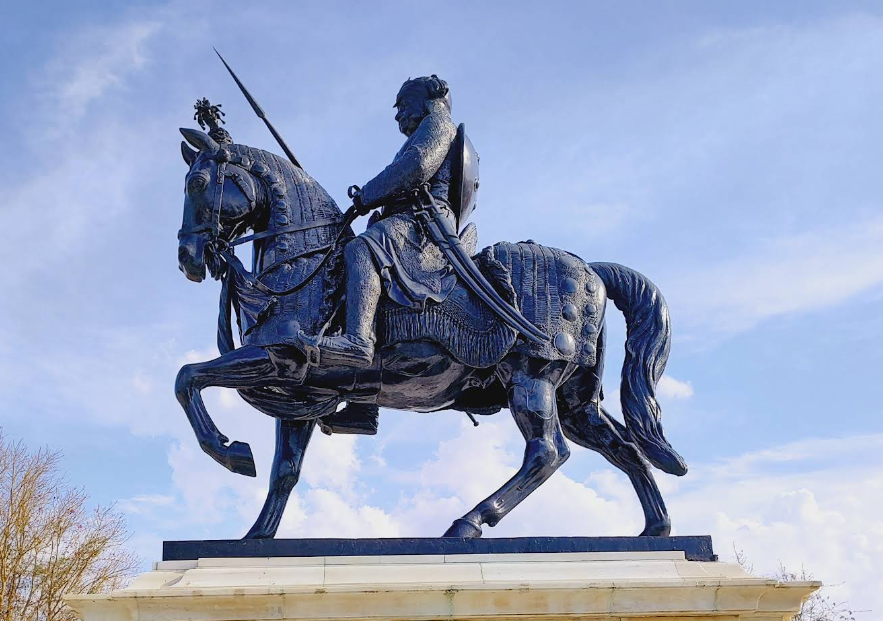
Discover the inspiring story of Maharana Pratap — the fearless warrior of Mewar who became a symbol of bravery, self-respect, and independence in Indian history. Learn about his life, battles, and undying spirit that still inspires millions.
Alt Text: “Statue of Maharana Pratap riding his loyal horse Chetak at Haldighati battlefield, Udaipur
The Legend of Mewar Begins
In the heart of Rajasthan, among the majestic Aravalli Hills, was born one of India’s greatest warriors — Maharana Pratap Singh Sisodia of Mewar.
Born on May 9, 1540, in Kumbhalgarh Fort, he was the eldest son of Maharana Udai Singh II and Maharani Jaiwanta Bai.
From childhood, Pratap was known for his valor, discipline, and sense of justice. He grew up listening to stories of his ancestors — kings who protected their land and people with honor. It was clear from the beginning that he was destined to carry the same flame of courage.
The King Who Never Bowed
In 1572, Maharana Pratap ascended the throne of Mewar, one of the most glorious kingdoms of Rajputana.
At that time, many kings across northern India had already accepted the rule of the Mughal Empire. But Pratap chose the harder path — the path of freedom.
He took a vow: “I will protect my land and people as long as I breathe.”
This was not a vow of hatred — it was a vow of honor. For Pratap, Mewar was not just a kingdom; it was his motherland, and protecting it was his dharma.
Chetak: The Loyal Companion
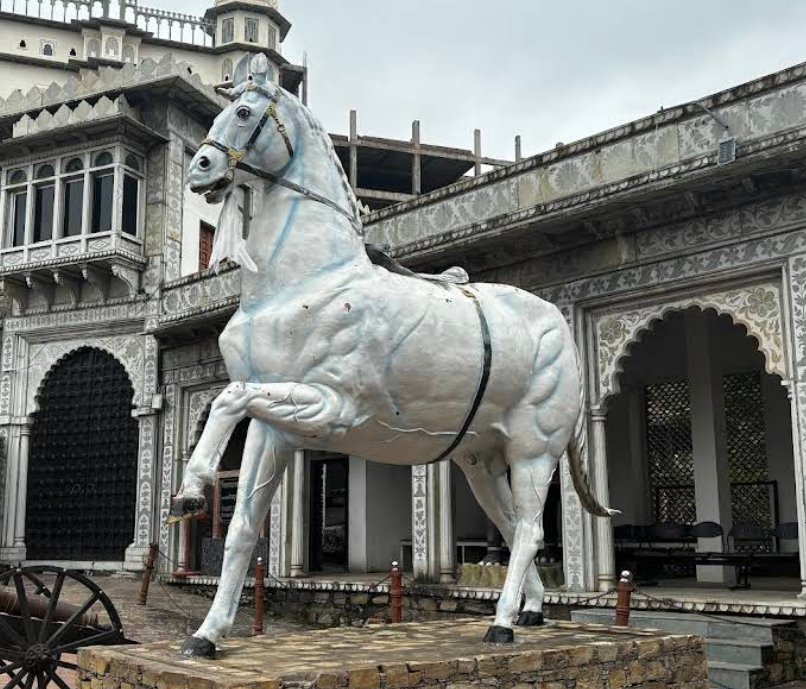
Every great warrior has a loyal companion — for Maharana Pratap, it was his beloved horse Chetak.
Chetak was no ordinary steed. Described as blue in color, swift as the wind, and fiercely loyal, he became a part of every story of Pratap’s bravery.
During the Battle of Haldighati, Chetak displayed unmatched courage. Even after being gravely wounded, he carried Pratap safely away from the battlefield, jumping across a wide river before collapsing.
Today, Chetak’s loyalty is remembered as deeply as the king’s valor — a symbol of friendship that transcends life and death.
The Battle of Haldighati (1576): A Testament to Valor
The Battle of Haldighati, fought on June 18, 1576, remains one of the most talked-about wars in Indian history.
It took place in the narrow passes of the Aravalli Hills near a village called Haldighati, named after its turmeric-colored soil.
Maharana Pratap led a force of around 20,000 Rajput warriors, facing a much larger imperial army. Yet, what they lacked in numbers, they made up for with unmatched courage and skill.
The battle was fierce and bloody. Swords clashed, elephants roared, and the air filled with war cries of “Jai Ekling Ji Ki!” — the divine protector of Mewar.
Though the war ended without a clear victory, it showed the world that Maharana Pratap could never be defeated in spirit.
🛡️ He did not lose; he lived to fight another day — stronger, wiser, and more determined.
Life in the Forests: A King Without a Palace
After the battle, Maharana Pratap refused to surrender.
He moved deep into the forests and mountains of Mewar with his family and soldiers. For years, he lived a life of struggle — without luxuries, without palaces — but with his dignity intact.
There are stories that his family survived on wild fruits and grass bread (called rotlo made from wild grains). Yet, not once did he lose faith in his cause.
His life became a lesson in sacrifice and perseverance — that true greatness lies not in comfort, but in standing tall even in hardship.
Return of Glory: Reclaiming Mewar
Over the years, Pratap reorganized his army and continued to defend his homeland. His unmatched willpower and courage inspired thousands to join him.
By the end of his reign, he had successfully reclaimed most of Mewar, including important forts like Gogunda, Kumbhalgarh, and Dewair.
He built a new capital in the Aravalli Hills called Chavand, where he ruled until his last breath.
🏹 He may not have conquered kingdoms, but he conquered hearts — and that is the mark of a true ruler.
Legacy That Lives Forever
📸 Photo 3: Statue of Maharana Pratap in Udaipur
Alt Text: “Bronze statue of Maharana Pratap with Chetak in Udaipur, symbol of Rajput valor”
Maharana Pratap passed away on January 29, 1597, at the age of 56.
But even centuries later, his name echoes in every corner of Rajasthan.
He is remembered not for what he owned, but for what he stood for — freedom, pride, and unshakable self-respect.
From textbooks to temples, from songs to sculptures — Maharana Pratap’s story continues to inspire new generations.
In 2003, the Indian government issued a commemorative coin in his honor, marking his contribution to the spirit of independence long before India’s modern freedom movement began.
Quick Facts About Maharana Pratap
| Title | Details |
|---|---|
| Full Name | Maharana Pratap Singh Sisodia |
| Born | 9 May 1540, Kumbhalgarh Fort |
| Dynasty | Sisodia Rajput, Kingdom of Mewar |
| Father | Maharana Udai Singh II |
| Horse | Chetak |
| Major Battle | Haldighati (1576) |
| Died | 29 January 1597, Chavand, Rajasthan |
| Known For | Courage, Independence, Loyalty, and Rajput Pride |
Places to Visit Related to Maharana Pratap
-
Haldighati Memorial: The historic battlefield with a grand statue of Pratap and Chetak.
-
Chetak Smarak: Built in memory of the loyal horse who saved the king’s life.
-
Chavand Palace: The last capital of Maharana Pratap, surrounded by forests and peace.
-
Moti Magri, Udaipur: A beautiful hill with a grand bronze statue of Maharana Pratap overlooking Fateh Sagar Lake.
External Source
For detailed history and official tourism details, visit:
The Eternal Flame of Courage
Maharana Pratap’s life is not just history — it’s a timeless lesson.
He proved that a ruler’s greatness is not in his throne but in his unbreakable spirit.
He fought for freedom when surrender was easier, lived with honor when compromise could bring comfort, and left behind a legacy that still shines like gold in India’s story.
He never lost — because courage never loses.



Leave a Reply